original works
in
ceramiC & wood
One-of-a-kind works handcrafted in Costa Rica and Nebraska

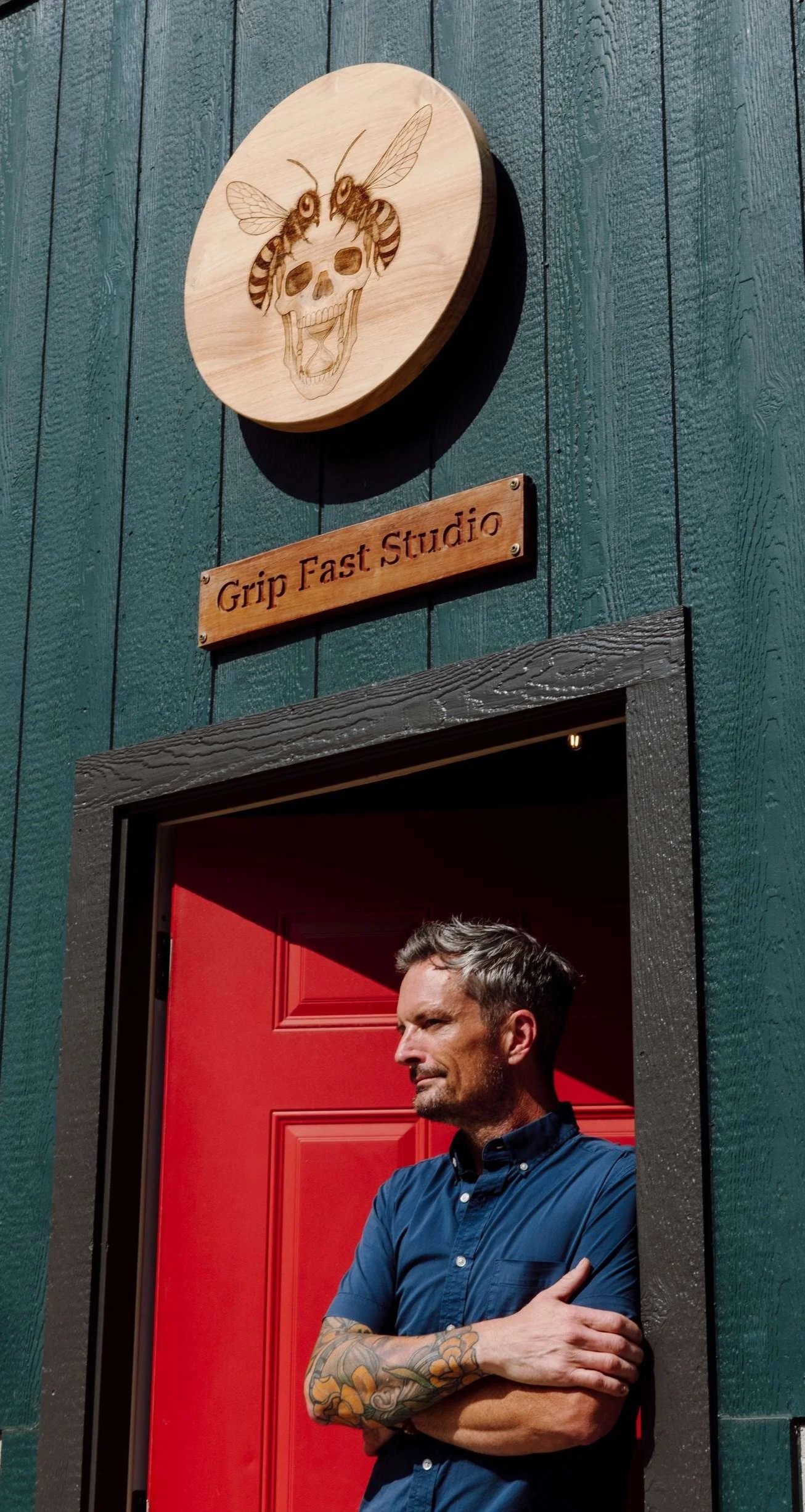
Grip Fast Studio
Some objects decorate a room. A few hold it. Grip Fast Studio makes the second kind.
Working primarily in ceramics and wood, Brendan Bishop creates abstract sculptures informed by natural forms, material exploration, and the passage of time. Developed between Nebraska and Costa Rica, the work explores how materials respond to pressure, movement, and change.
SHOP

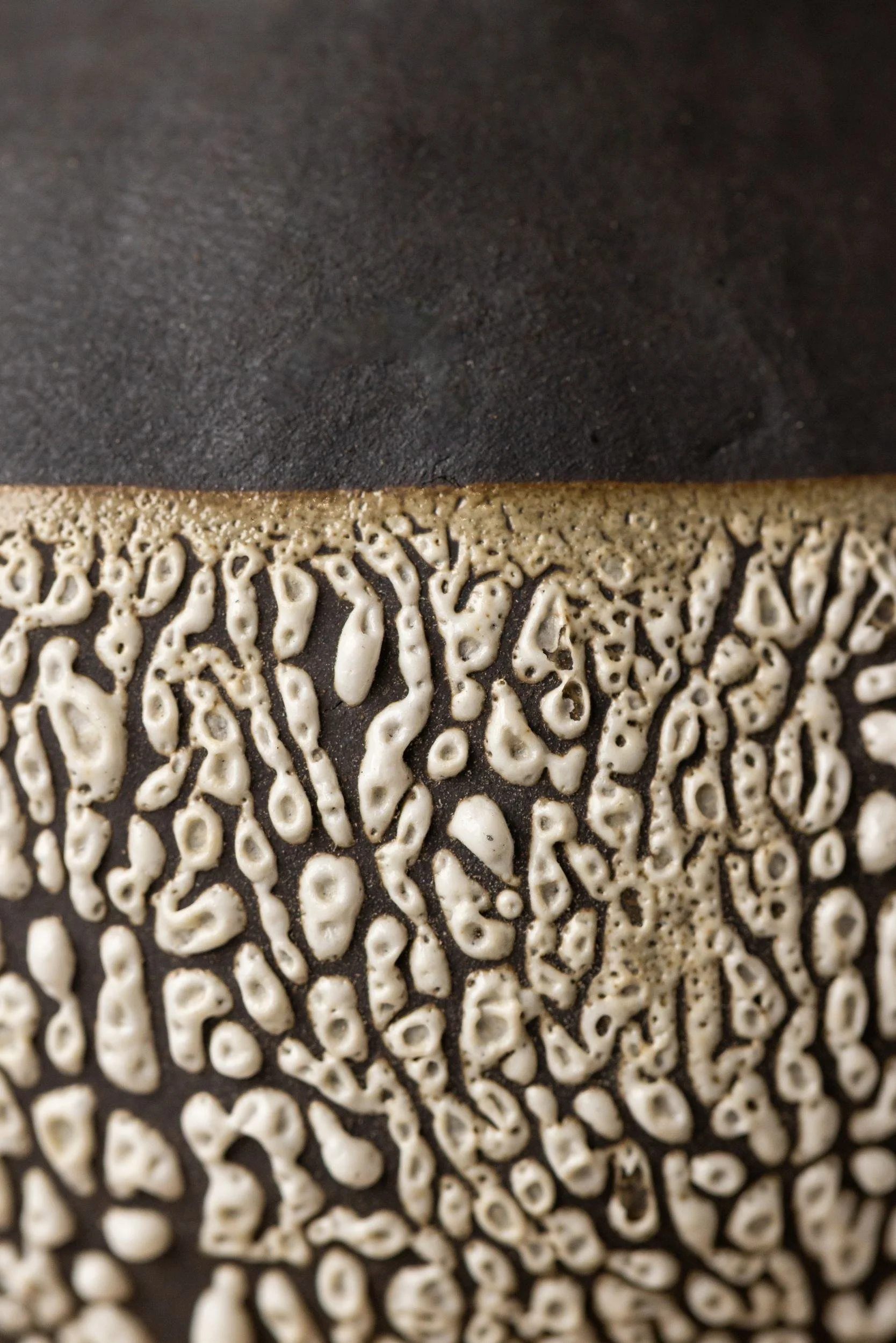
A seed-pod form of white stoneware in a carbon-black finish — ridged, chambered, closer to banksia cone than leaf — mounted proud of layered walnut and teak. The beveled panel frames it like a specimen that grew there. Wood as habitat, clay as inhabitant.
Form Study
2026
F030

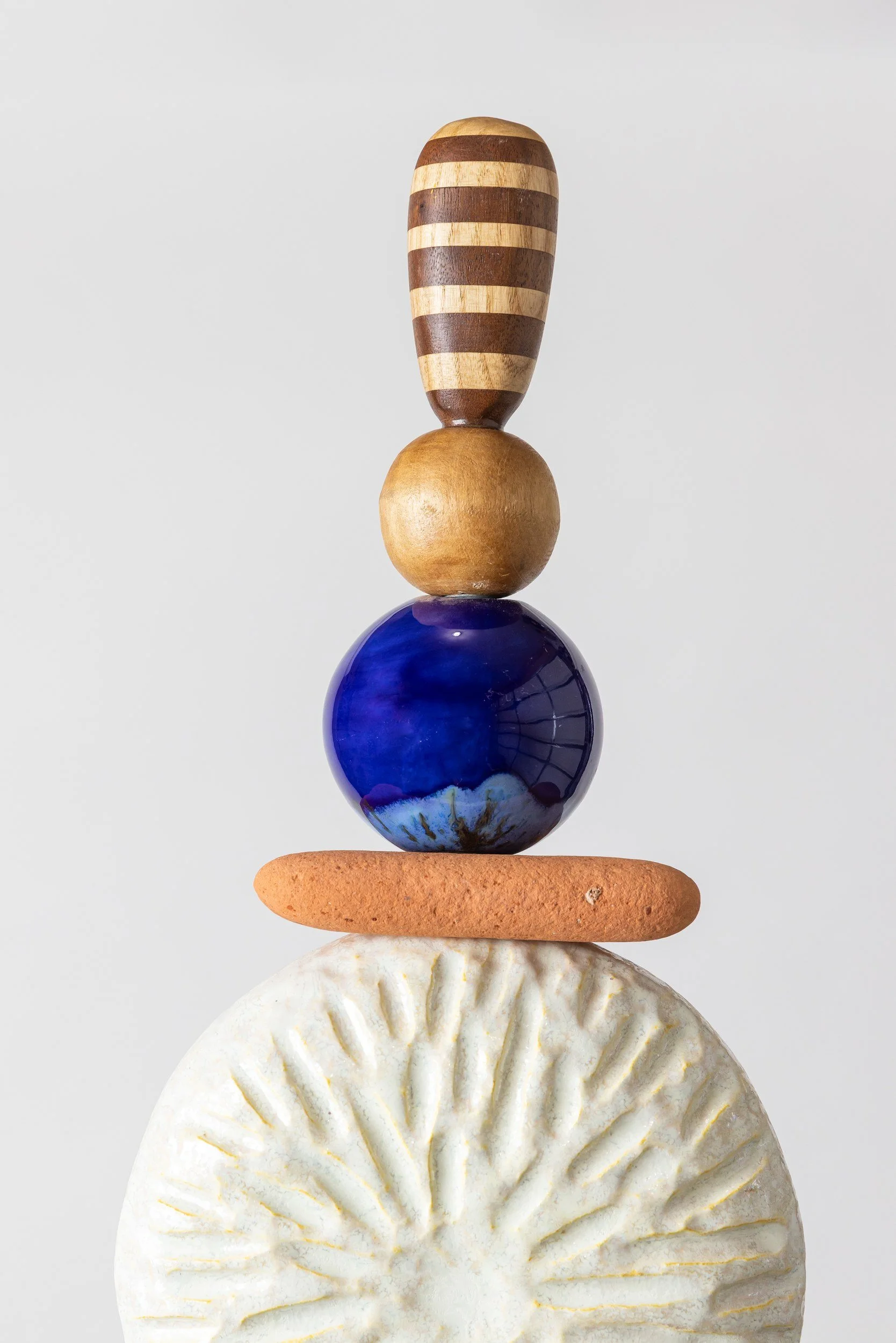
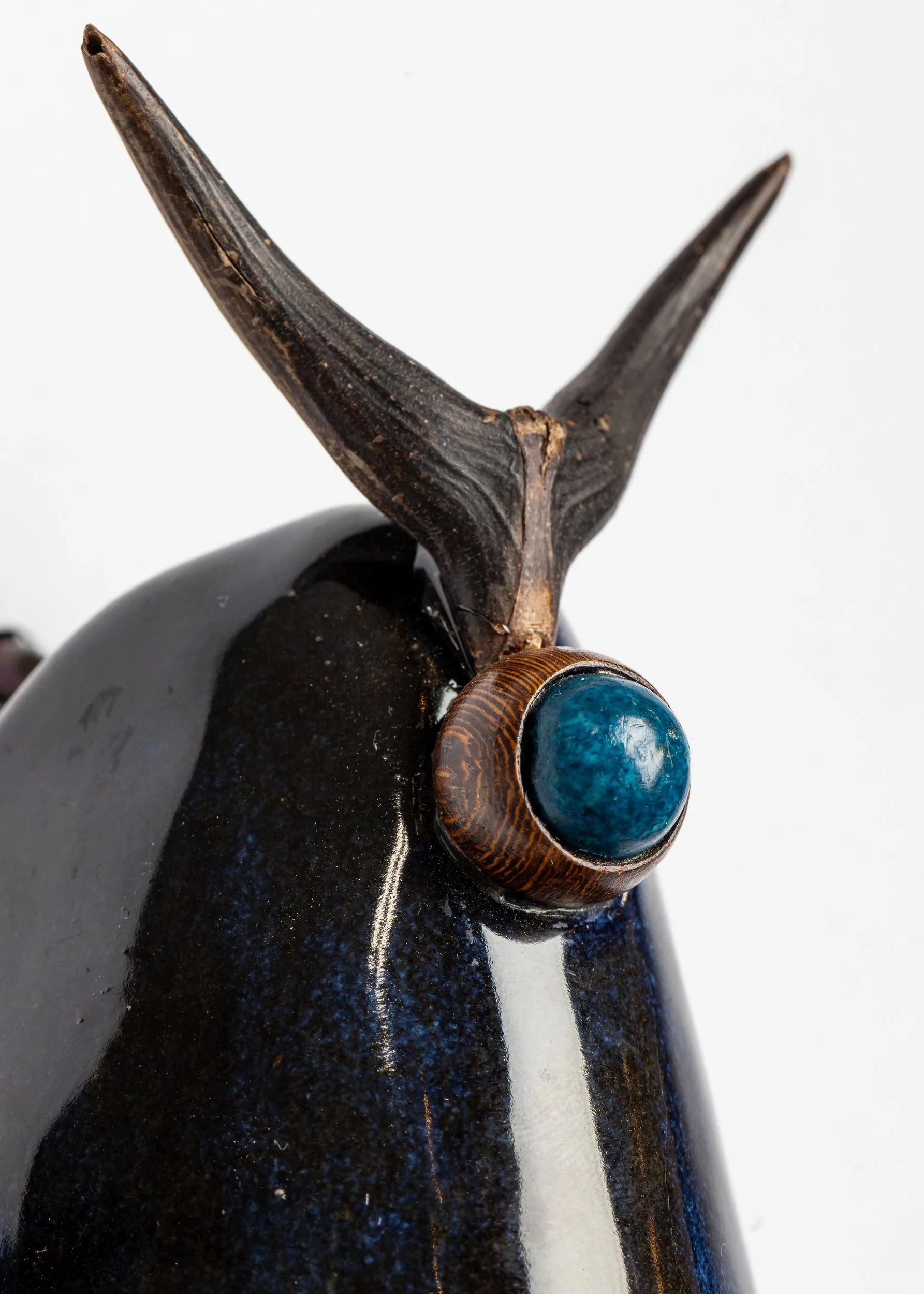
A column of collected weights in glazed stoneware — iron-washed slab base, bronze hourglass, cobalt spikes, a fluted lantern bead — crossed mid-height by a teak and walnut pediment. At the top a white orb carries a forged black spike and a barnacle-textured finial trailing natural bristle. The series’ longest reach from anchor to feather.
Totem Series
2026
**” L x **” W x **” H
** LBS
Contact us for shipping
T0015

Torn sheets of carbon-black stoneware in a turning mass, matte char folding into wet gloss, gold flashing through like a starfield, raised on black steel. Cresting wave, opening bloom, debris cloud — it depends where you stand.
Impact Study
2026
IM017

Sea forms in white stoneware, stacked between teak, walnut, maple, and birch. Sand dollar, bivalve, urchin — pulled from the tide line and translated to fired clay, hand-carved wood and hourglasses marking the intervals. Below, a split in the live-edge base is held closed by a cobalt key: things break, time runs, we keep them anyway. The first totem, and the series’ clearest statement of intent.
Totem Series
2025
19” L x 24” W x 78” H
58 LBS
Contact us for shipping
TM001
materials with a history
Materials are selected as much for their individual character as for their structural possibilities. Wood from the native teak and nispero tree sourced from a generational Costa Rican plantation, to storm-felled hardwoods recovered in Nebraska, each brings its own history, texture, and imperfections.
Rather than conceal those characteristics, the work often incorporates them into the final composition.
The result is a continuing dialogue between the natural qualities of the material and the decisions made by the artist.